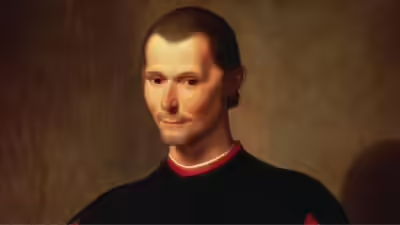
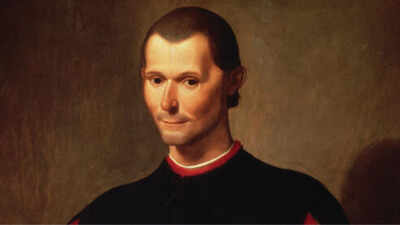
Few political quotes are as famous, debated and misunderstood as this line from Niccolò Machiavelli’s The Prince.Written more than 500 years ago, the quote has become shorthand for ruthless leadership. It is often used to describe powerful rulers, tough politicians and leaders who rely on authority rather than popularity. Yet the idea behind it is more complex than many people realise.Machiavelli wrote: “Since love and fear can hardly exist together, if we must choose between them, it is far safer to be feared than loved.”The sentence appears in The Prince, a political treatise written around 1513. The book was published after Machiavelli’s death in 1527 and would go on to become one of the most influential works in political thought.
Who was Machiavelli?
Niccolò Machiavelli was an Italian diplomat, political thinker and writer born in Florence in 1469 during the Renaissance. He spent years working in the Florentine Republic, dealing with foreign governments and observing rulers across Europe.His political career ended when the powerful Medici family returned to power in Florence in 1512. Machiavelli was dismissed from office, imprisoned and accused of conspiracy. After his release, he withdrew from public life and began writing.It was during this period that he produced The Prince, the work that would make him one of history’s most discussed political thinkers.
What did the quote mean?
Contrary to popular belief, Machiavelli was not simply telling rulers to be cruel.In The Prince, he argued that a leader’s main duty is to maintain political stability and protect the state. He believed that relying solely on the love of the people could be risky because human loyalty often changes when circumstances become difficult.People may support a ruler during good times, but abandon that ruler during war, crisis or hardship.Fear, on the other hand, can be a stronger and more reliable force because it creates consequences for disobedience.However, Machiavelli also included an important warning that is often overlooked. He wrote that while it may be safer to be feared than loved, a ruler must avoid being hated. Excessive cruelty, injustice or abuse of power could ultimately destroy a leader’s position.In other words, fear could be useful, but hatred was dangerous.
Why is Machiavelli called a political realist?
Machiavelli is widely regarded as one of the founders of political realism.Political realism is the idea that politics should be studied as it actually works rather than how people wish it would work. Realists focus on power, security, self-interest and practical results.Before Machiavelli, many political writers concentrated on ideal rulers and moral perfection. Machiavelli instead examined how leaders behaved in the real world.He looked at history, wars and governments and asked a simple question: What helps leaders gain and keep power?This approach made him controversial. He was accused of encouraging manipulation and dishonesty. Supporters argued that he was merely describing political reality.
How did his ideas influence the world?
Machiavelli’s influence has stretched far beyond Renaissance Italy.His writings have been studied by kings, presidents, military leaders, diplomats and political scientists for centuries. The term “Machiavellian” even entered everyday language to describe cunning or strategic behaviour in politics and business.Many later political thinkers engaged with his ideas, whether they agreed with them or not.His work also helped shape the modern study of political science by separating political analysis from religious and moral teachings. Instead of asking what rulers ought to do, Machiavelli often focused on what they actually do. This is called ontology.
Does the quote still matter today?
More than five centuries later, the debate continues.Modern democratic leaders generally seek public approval and trust because elections depend on popular support. Yet governments around the world still use authority, laws and deterrence to maintain order.The tension between earning public affection and commanding respect remains a central political question.Some leaders build support through personal popularity and charisma. Others rely more on discipline, control and displays of strength.Machiavelli’s quote continues to resonate because it touches on a timeless issue: What is the most effective way to lead people?Even those who disagree with his conclusion often acknowledge the importance of the question.
A quote that refuses to disappear
Few political thinkers have been quoted as often as Niccolò Machiavelli. More than 500 years after The Prince was written, his observations about power still spark debate in classrooms, parliaments and political campaigns.Whether one sees him as a cynical strategist or a clear-eyed observer of human behaviour, Machiavelli changed the way people think about politics.His famous line about love and fear endures because it challenges readers to confront an uncomfortable reality: leadership is not only about ideals, but also about power, authority and the difficult choices that come with governing.