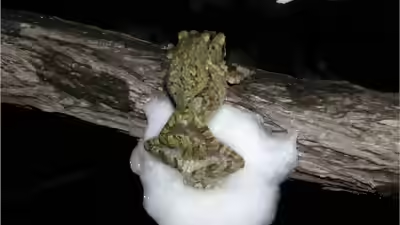
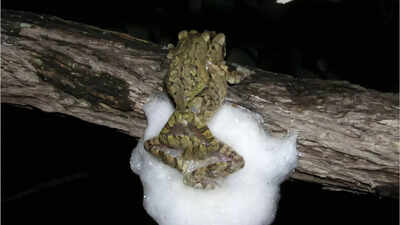
Female African treefrogs mate with several males at the same time, working together to whip up a larger foam nest that protects hundreds of eggs from drying out.This group nest-building behaviour provides a fresh explanation for why females in many animal species mate with multiple partners, according to a study written by Phillip Byrne and Aimee Silla in The Conversation.The findings offer field evidence for a new scientific idea called the “nesting-assistance hypothesis”, created by a team of four frog experts with experience in animal behaviour, evolutionary biology, and genetics.By studying a wild population of African gray foam-nest treefrogs (Chiromantis xerampelina) across an entire breeding season, the team found that extra male partners directly help build better nests, giving tadpoles a much higher chance of surviving.
Whipping up a protective home
African gray foam-nest treefrogs live across the warm savannas and dry forests of southeastern Africa. During hot, rainy summer nights between October and February, females climb tree branches hanging over water to build their nests.Building a nest takes five to six hours. The female releases fluid from her body, mixes it with water, and uses her back legs to whip the liquid into a thick foam.To fertilise the hundreds of eggs laid inside the nest, the female needs sperm from male partners throughout the building process. While a female sometimes pairs with just one male, most attract several partners at once in a mating system known as “simultaneous polyandry”. A female usually mates with five males at the same time, though groups of 10 to 15 males are also common.During these group matings, male treefrogs do not just fertilise eggs. They move their back legs in time with the female, whipping up the fluid together. When more males join in, the overall whipping effort increases, creating a much larger foam nest.
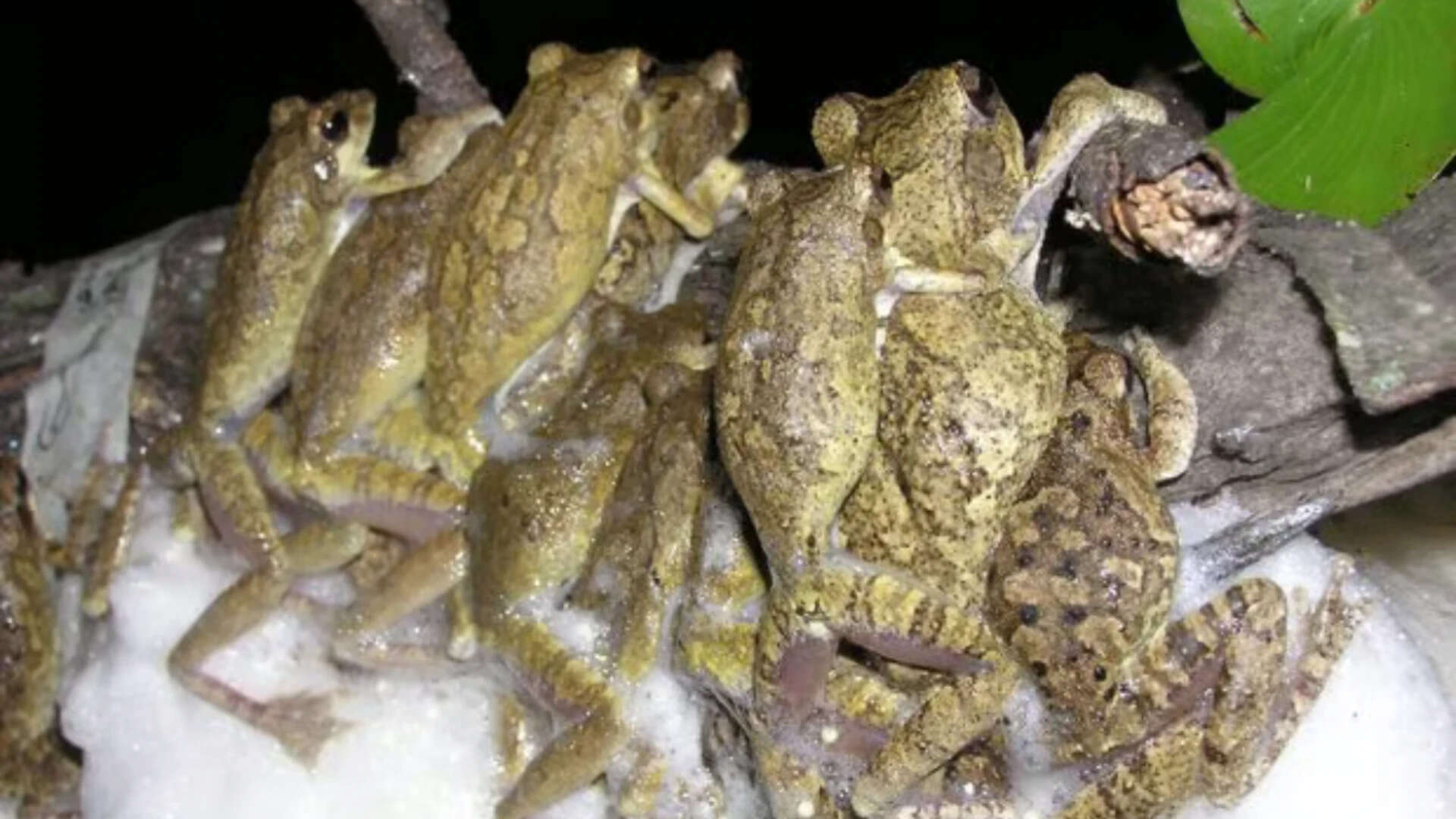
Harmonious orgy is winning formula for frogs
Larger nests stop eggs from drying out
The finished foam nest protects the growing eggs from intense heat for nearly a week until the tadpoles hatch and drop into the water below. However, if the sun dries out the nest too quickly, all the eggs inside die.The research team found that nests built by just one male and female were small and almost always dried out before the tadpoles could hatch. In contrast, the larger nests built with help from multiple males kept moisture for much longer, allowing the tadpoles to survive.In return for their building work, participating males get to father a share of the offspring.
Rethinking multiple mating in animals
Until the 1990s, scientists believed that females mating with only one partner was the rule in nature. DNA testing later showed that females in many animal groups, from bed bugs to blue whales, regularly mate with multiple males during a single breeding season.Researchers previously showed that mating with multiple partners can guarantee eggs get fertilised, provide extra food or care, or increase the genetic variety of offspring. The nesting-assistance hypothesis adds another direct benefit: help from male builders.The authors note that male nesting help also happens in other species where females have offspring with multiple fathers. Male help appears in solitary bees and wasps, various birds, fish that lay eggs in caves or sand, Arctic foxes, gray wolves, and small monkeys like tamarins and marmosets. In these species, males help gather materials, dig nest holes, or build homes.The research team suggests that getting help from multiple male workers allows females across many species to get better homes that help their young survive, giving a broader reason for why mating with multiple partners is so common in nature.
Nest hardening, hatching, and body traits
The physical properties of the foam nest change quickly once the group finishes whipping. The outside of the mixture dries into a hard shell that insulates the soft interior. This outer shell acts like a small greenhouse, keeping the inside humid while reflecting sunlight to control temperature changes.Inside this protective bubble, embryos develop over four to six days. As the eggs hatch, the young tadpoles float inside the liquid centre of the nest. Once they reach a certain stage, the tadpoles wriggle downward, melting the bottom of the foam nest until they drop straight into the water below to finish growing.Female Chiromantis xerampelina must carefully manage their own body water during the long building process. Because whipping secretions into foam uses up a lot of fluid, a female often pauses mid-way to climb down the tree, drink water in the pool, and return to finish building.The adult frogs also have special body traits to survive their harsh environment. They can change their skin colour from dark brown to a chalky white to reflect heat, and they pass waste as dry powder rather than liquid urine, helping them save water during long dry periods.