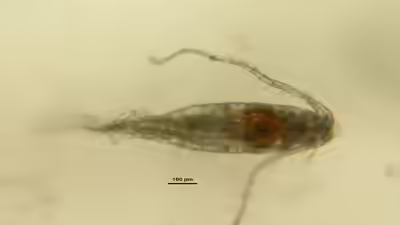
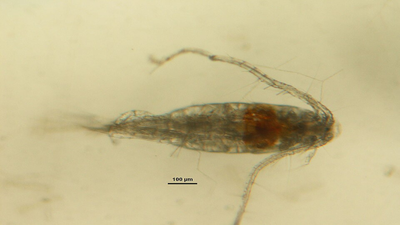
When acid rain swept across parts of Ontario in the 1960s, it had a dramatic effect on freshwater ecosystems.Populations of fish were wiped out, many microscopic aquatic species declined, and vast areas of lakes became far more acidic than they had been in centuries. Amidst the ecological collapse, some of the smallest organisms in these aquatic systems survived, but a new study shows they actually did something far more extraordinary.They evolved rapidly in response to increasing acidity, then many of those adaptations reversed as lake conditions recovered.A recent study in the journal Proceedings of the Royal Society B offers one of the clearest real-world examples of what scientists call “evolutionary rescue”, a process in which natural selection helps a population avoid extinction during severe environmental change.Researchers studying Killarney lakes found that freshwater copepods that lived in the lakes in Ontario’s Killarney region evolved in response to increasing acidity during the period when the lakes were at their most acidic, a change that likely contributed to population recovery after initial declines.A natural archive hidden beneath lake bedsThe study focused on a tiny freshwater copepod, Leptodiaptomus minutus, which is a key component of food webs in aquatic systems.The method used to investigate the survival of the species was ‘resurrection ecology’. Many tiny aquatic species produce dormant eggs that settle into the sediments on the bottom of lakes, remaining viable for decades. These lake sediments essentially form a biological archive, preserving biological snapshots of past populations.By analysing sediment cores from two Ontario lakes-George Lake and Lumsden Lake, both heavily affected by acid deposition due to SO2 emissions from metal smelters in the mid-20th century-researchers were able to find sedimentary layers from before, during and after acidification periods, using radiodating techniques with the naturally occurring isotope lead-210 dating.The survivors were differentThe resurrected animals revealed a fascinating pattern. Copepods from the era showed traits associated with improved performance under acidic conditions, including faster development, and matured more quickly than pre-acidification populations.In other words, according to the study, these traits were advantageous, and selection strongly favoured these traits, which then spread throughout the population.“Copepods from the acidification period were adapted to acidic pH,” the authors wrote, noting that pre-acidification populations were much more sensitive to acidic waters.The results suggest that natural selection favoured acid-tolerant individuals, allowing those traits to spread through the population over time.
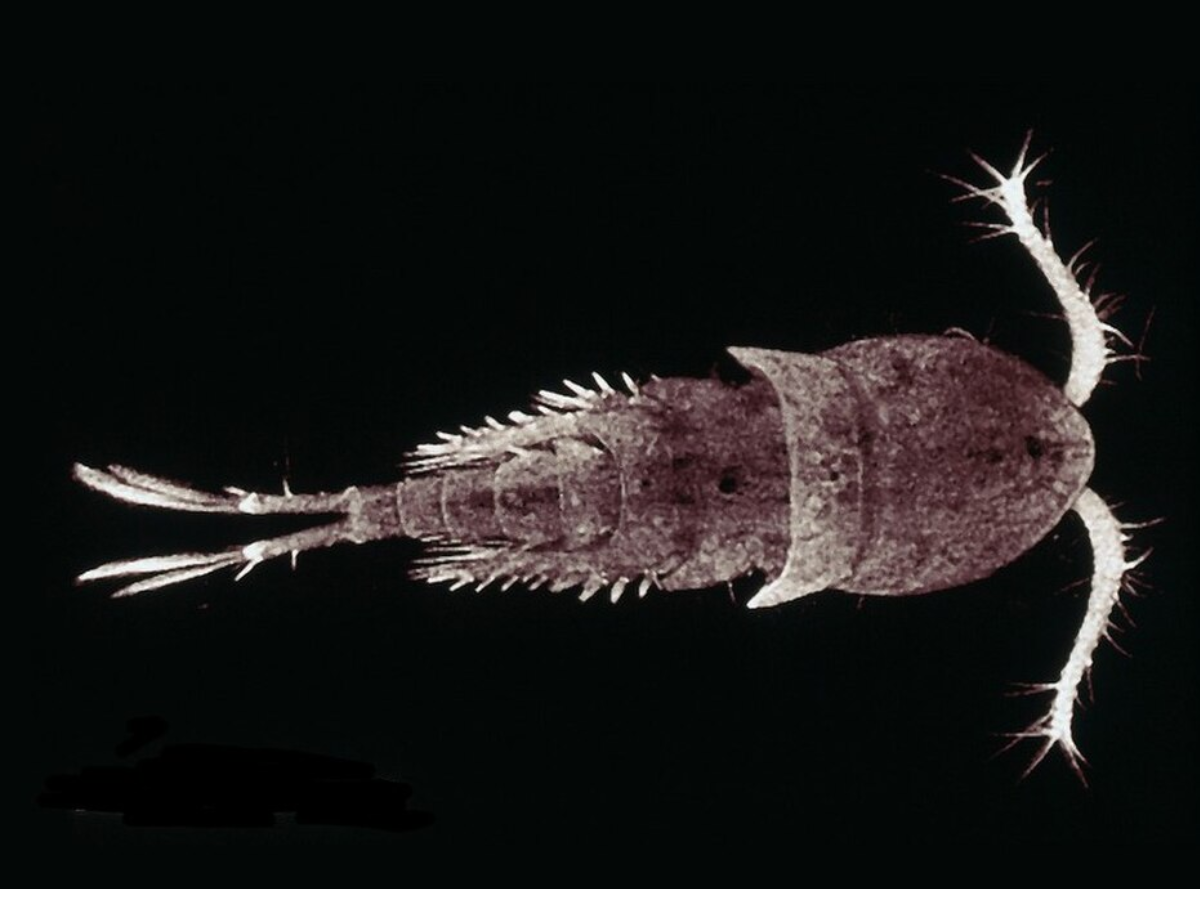
Freshwater copepod| Image Credit: Wikimedia Commons
The DNA held a record of evolutionScientists also examined genetic changes that occurred throughout this century. They sequenced the genomes of dormant eggs dating from roughly 100 years ago up to the present day, representing about 200 generations of copepods. The data clearly show a shift in allele frequencies during the period of acidification, providing direct evidence that genetic change occurred within the population.Researchers identified thousands of variations at the genetic level that were associated with the period of acidification, and there were signs of powerful selective forces acting on the population during this time.Studies revealed that copepods experienced declines as acidification intensified, followed by a subsequent rebound. This pattern of population decline followed by recovery is consistent with evolutionary rescue, a phenomenon that has been difficult to document in natural populations. According to the authors, such convincing examples have been few and far between due to the challenge of assembling 100-year archives for the environment, populations and genomes of these microscopic creatures.A surprise in the recoveryA remarkable aspect of the study was that the copepods adapted again. After the lakes had begun to recover, partly due to environmental regulations put in place in the 1970s that limited sulphur emissions, there was an inverse of the previous trend.Populations during this recovery period displayed an increased sensitivity to acidic conditions. Furthermore, at the genetic level, numerous genetic changes associated with acidification shifted back toward pre-acidification frequencies. Scientists described this phenomenon as an ‘adaptive reversal’, which is a adaptive reversal, where traits favoured during a catastrophic event now become less advantageous once environmental conditions have recovered.It suggests evolution did not progress in just one direction. Instead, it responded to environmental change and later shifted again as conditions recovered.What this tells us about our own worldThe study comes at a time of critical interest among scientists trying to determine if many species are genetically capable of coping with the human-induced changes in the global environment. Evolutionary rescue has been shown in controlled laboratory settings on many occasions, but real-life examples in complex natural ecosystems have been relatively rare.The Ontario copepods suggest that at least one species was genetically able to respond and adapt when its world was fundamentally altered by the environmental conditions it encountered. At the same time, researchers warned that this survival came with a cost; they found that the intense period of acidification had decreased copepod population sizes and possibly even reduced genetic diversity in these populations.This could affect their ability to adapt to future environmental changes. The study also illustrates that ecological recovery does not mean the environment returns to exactly how it was before the disturbance.As conditions change, species continue to evolve, creating enduring biological evidence of the event that altered them, which lingered for decades in the sediment, buried in the egg sacs of tiny organisms.