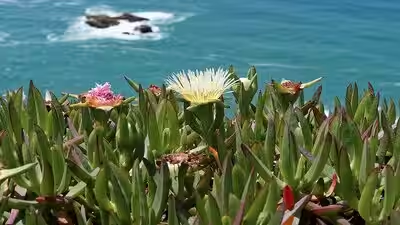
A plant introduced to California to stop soil from moving is now helping change the very coastal landscapes it was meant to protect. Highway ice plant, or Carpobrotus edulis, was brought from South Africa to California in the early 1900s to stabilise soil along railway tracks. Today, the succulent has spread along large stretches of the California coast, where its dense mats can crowd out native vegetation and alter the natural movement of dunes.It may seem harmless. The leaves of the plant are thick and triangular-shaped and are always green even in harsh weather. In addition, the plant’s large flowers make it an appealing ground cover. However, when established, the ice plant grows very fast. PlantRight notes that the plant grows by 3 feet in diameter within a year and is able to spread up to 165 feet. Its shoots are also able to generate more plants, and fruits bear hundreds of seeds which are transported by mammals. This is one reason the plant is hard to control.From erosion control to coastal invasionThe original logic behind planting ice plant was straightforward. California’s railways and roads crossed exposed slopes and sandy coastal areas where loose soil could be difficult to hold in place. A plant that grows close to the ground and forms a thick mat appeared useful for stabilising disturbed surfaces.According to Ecology, Carpobrotus edulis has been invading native and non-native plant communities in California since its introduction in the early 1900s. Research examining coastal grassland, backdune and coastal scrub communities found that different factors influenced how the plant established and spread, including soil disturbance, herbivory and competition with other plants.The problem is that stabilising soil is not always beneficial in a dune ecosystem. Coastal dunes are naturally dynamic. Wind and waves move sand, creating shifting conditions that many native dune plants and animals have adapted to. A dense cover of ice plant can interfere with this movement. PlantRight also notes that the ice plant stabilises dunes, affecting the natural processes that form and move them. It can also increase soil salinity and block sunlight from reaching other plant species. As the plant decomposes, organic matter accumulates in the sand, creating conditions that can favour other non-native plants. In other words, the plant changes more than the dune’s appearance.Thick mats leave little room for native plantsIce plant spreads by creeping along the ground, producing roots and shoots as it expands. Over time, separate plants can merge into thick mats covering large areas. These mats can occupy space that would otherwise be available to native coastal vegetation.More recent research has found similar concerns in coastal dune communities. According to Biological Conservation, researchers studying Carpobrotus edulis found that invaded soils could retain effects associated with the plant even after it was removed. The study also found that native species could face constraints in previously invaded areas, indicating that simply pulling out the visible plants does not necessarily mean the ecosystem immediately returns to its earlier condition. This matters because ice plant can influence more than the plants directly beneath its leaves. By changing soil conditions and accumulating organic material, it can alter the environment in which other species attempt to establish.The changes can also extend to the structure of the dune itself. The repeated movement of sand shapes a naturally shifting dune. When a dense mat of vegetation holds that sand in place, the physical behaviour of the dune can change. That does not mean every dune covered by ice plant will respond in the same way, but it does mean the plant can interfere with a process that is central to coastal dune ecology.
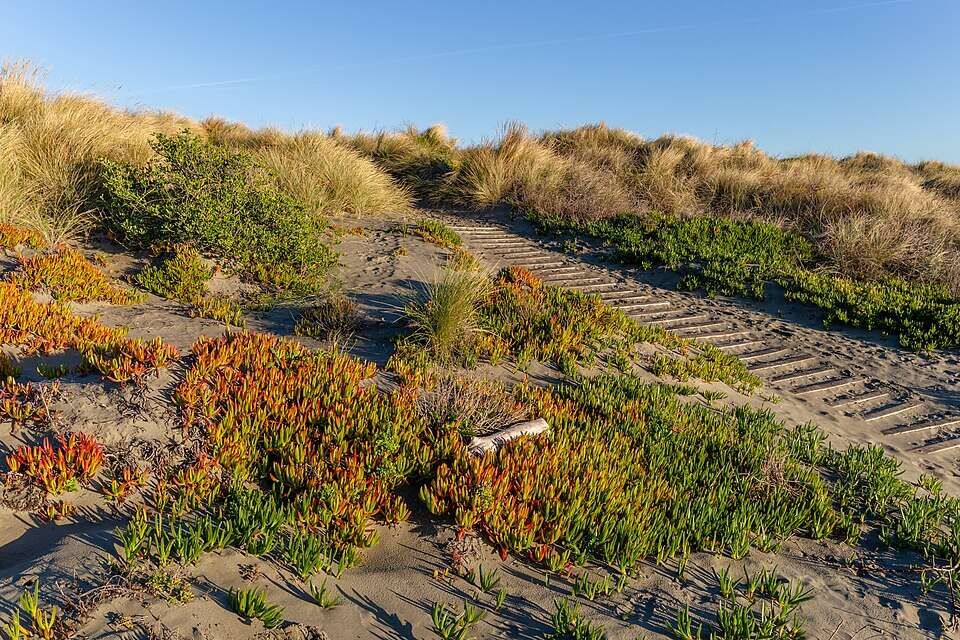
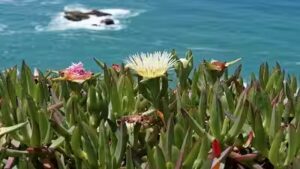
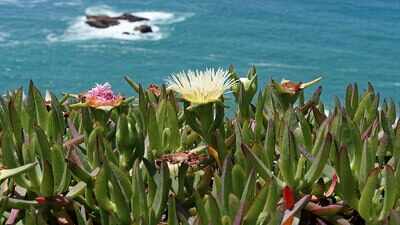
More than a century after ice plant was brought to California, its thick mats can now be found across coastal bluffs, grasslands, dunes, scrub and other habitats. Image Credits: Wikimedia Commons.
Removing the plant is only the beginningThe traits that made it useful for erosion control also make it an effective invader: it grows low to the ground, spreads horizontally and thrives on the coast. Ice plant reproduces both by seed and vegetatively from pieces of the plant itself. Removing it requires care, because even small plant fragments can regrow and bare ground can give it another chance to establish. Restoration may also require helping native vegetation recolonise the area and monitoring for signs of reinvasion. This is especially true in coastal habitats, which already face harsh growing conditions from salty air, shifting sands, drought and high winds.California’s experience with Carpobrotus edulis offers a broader lesson about ecological engineering. A plant selected for its ability to hold soil in place can behave very differently when introduced into an ecosystem where natural disturbance is itself part of the landscape. More than a century after ice plant was brought to California, its thick mats can now be found across coastal bluffs, grasslands, dunes, scrub and other habitats.