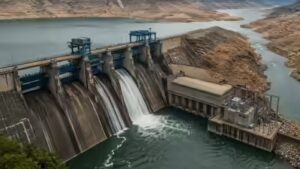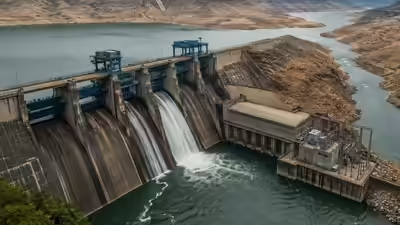
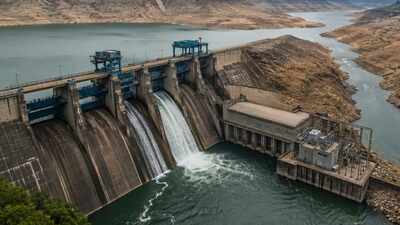
El Nino and the resultant weak monsoon has had an impact on India’s hydropower output, which has dropped by more than 20% in June. The dry weather, which is associated with El Nino, has meant that the water levels in reservoirs have gone down. This has increased pressure on the power grid during the peak summer demand period.Data from the India Meteorological Department showed that cumulative rainfall across the country was 38% below normal until July 1, largely due to the development of El Niño conditions over the Pacific Ocean, which affected the southwest monsoon running from June to September.
Hydropower generation sees sharp fall
According to data from the power ministry quoted in a Bloomberg report, electricity generation from hydroelectric projects declined nearly 21% compared with the same month last year, marking the sharpest year-on-year fall since February 2024.Also Read | India’s economy passed the Iran war test. Could El Nino spoil the party? For the quarter ended June, hydropower generation was down almost 7%, even as coal-fired, nuclear and renewable energy plants increased output to meet record electricity demand triggered by extreme temperatures.As of July 2, reservoirs monitored by the Central Water Commission contained 47.7 billion cubic metres of water, which is only about one-fourth of their total storage capacity. Water levels across the 166 reservoirs tracked by the agency were 39% lower than those recorded a year earlier.
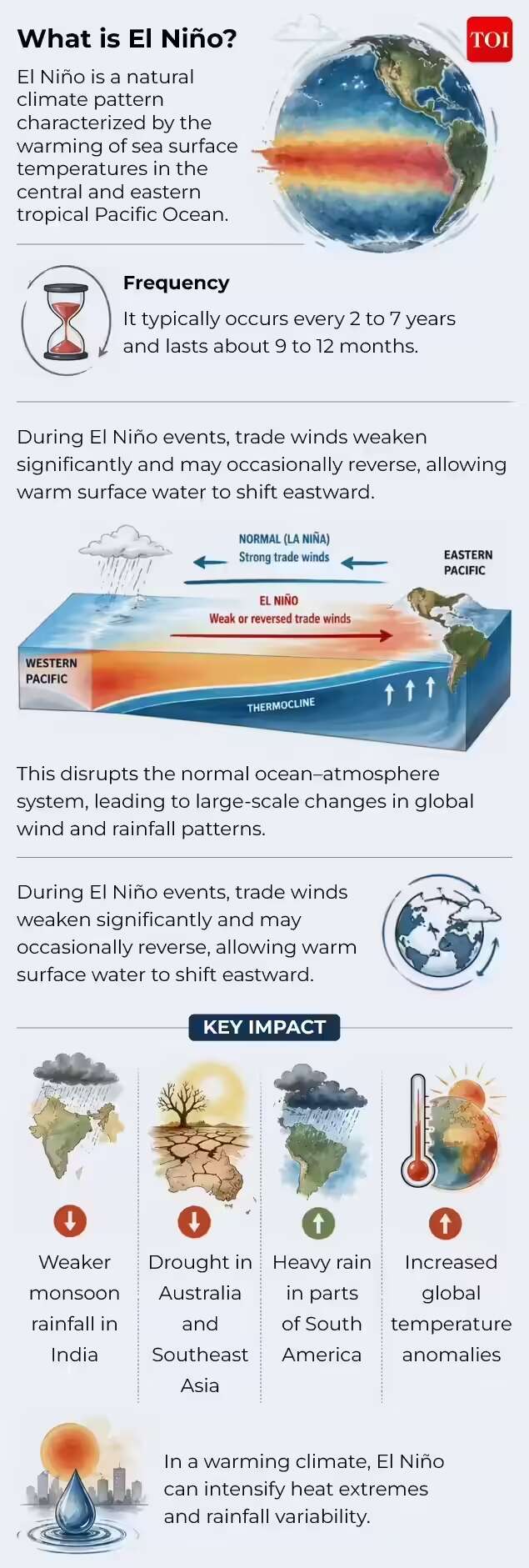
What is El Nino and its impact?
Sowing impacted
The rainfall deficit not only curtailed hydropower generation but also impacted irrigation during the critical sowing season.Total acreage under kharif crops has fallen 21% so far this season as subdued rainfall and the delayed advance of the southwest monsoon slowed sowing activity, according to agriculture ministry data released on Monday.The data showed that the area sown under kharif crops stood at 350.85 lakh hectares as of July 6, compared with 442.8 lakh hectares during the corresponding period last year. Paddy cultivation declined 13% to 60.24 lakh hectares from 69.3 lakh hectares a year earlier. Sowing of pulses also dropped, with coverage falling to 37.15 lakh hectares from 47.49 lakh hectares. The area under Shri Anna, or coarse cereals, decreased to 60.12 lakh hectares from 71.86 lakh hectares last year.Oilseeds recorded the steepest decline, with acreage shrinking to 66.31 lakh hectares from 109.27 lakh hectares in the year-ago period. Cotton sowing also registered a sharp fall, declining to 63.18 lakh hectares compared with 82 lakh hectares last year.
Monsoon deficit : Some ground covered in July
India’s rainfall deficit narrowed to 20% during the first week of July as the southwest monsoon gathered momentum, bringing widespread rainfall across central, western and parts of southern India, according to IMD data.Reservoir levels are expected to improve as the monsoon advances across more parts of the country, helping replenish water storage while also reducing electricity demand. The IMD has projected that rainfall during July will remain below 94% of the long-term average, although precipitation has picked up in recent days.