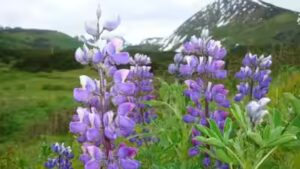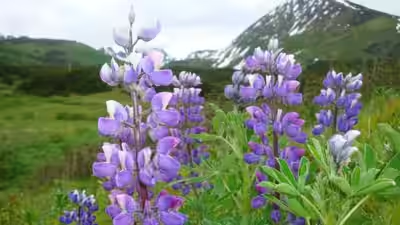
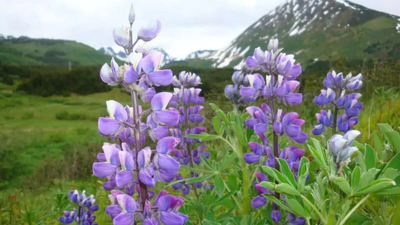
Every summer, Iceland turns purple as Alaskan lupins bloom across vast swaths of land. For tourists, the flowers have become one of the country’s most striking natural sights. But this beautiful landscape is not without controversy.The flower was imported to restore damaged soil, but conservationists now consider it one of the country’s most troublesome invasive species. Scientists say the lupin story shows how an ecological fix can produce unexpected long-term consequences.Introduction of Alaskan lupins in IcelandPurple flowers of the Alaskan lupin (Lupinus nootkatensis) are native to coastal Alaska and parts of western Canada. As reported by a peer-reviewed study from Frontiers in Plant Science published in 2018 and available through PubMed, the species was introduced to Iceland in 1945 to solve soil erosion problems and contribute to reforestation.
CJP Jantar Mantar Protest Updates
By then, decades of deforestation, volcanic eruptions and overgrazing had left much of the island’s native flora depleted and its soil vulnerable to erosion.In the study, the authors compared lupine cover classes of 0, 10–50, and 51–100 percent across heath-, wood- and grasslands, using pairwise comparisons and mean comparisons to track changes in native plant diversity, richness and community composition.They found that diversity dropped significantly at high cover in heath and woodland, while heathland species richness declined linearly with increasing lupine cover. A species distribution model also estimated that 13.3% of Iceland was suitable lupine habitat, with this area projected to more than double by 2061–2080.Since this plant fixes atmospheric nitrogen, it makes poor soils more nutrient-rich and, with the help of its strong roots, prevents erosion. Scientists say these traits made the plant a good candidate for restoring infertile land. Alaskan (Nootka) lupin has been used for decades to reclaim severely degraded land by improving soil fertility through nitrogen fixation and aiding the revegetation of degraded landscapes.
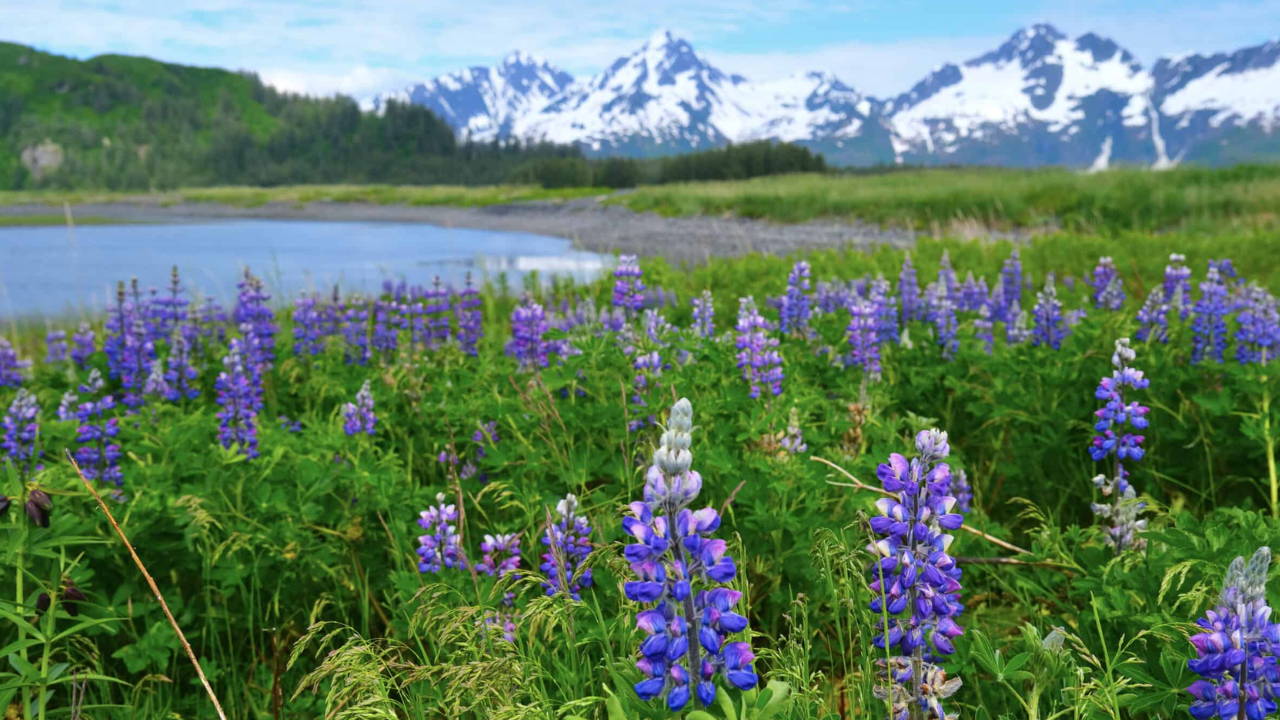
The plant’s nitrogen-fixing ability benefits degraded soils but harms natural ecosystems. This situation highlights the complex challenges of ecological restoration projects. Image Credit: Wikimedia Commons
Restoration project that brought surprising lossesWhile the plant helped restore degraded soil, scientists found that its rapid spread began affecting ecosystems far beyond the sites where it was first planted. As stated in the Frontiers in Plant Science 2018 article, the dense stands of lupins affect the soil composition by introducing nitrogen into it. This process is beneficial for some plants but makes survival hard for the majority of native species adapted to living in nutrient-deficient soil of Iceland.Scientists conducted a survey in heathlands, woodlands and grasslands and discovered that in sites dominated by the growth of this plant, there was significantly less plant diversity, especially in rich heathlands. Several native plants, including cushion plants, orchids and small woody species, became rare or disappeared from those areas. Scientists concluded that the lupin acts as an “ecosystem engineer.”Climate change can worsen the situation, scientists cautionThe threat is expected to grow in the coming decades. Their model suggests that roughly 13.3 percent of Iceland is currently suitable for lupins. In scenarios for 2061 to 2080, that figure is expected to nearly double as warming allows the plants to spread to higher elevations and the Icelandic Central Highlands.As the paper notes, roads have played a major role in the species’ spread because seeds are carried by human activity. However, as climate becomes more favorable for the species, this will likely play a less important role in the expansion of lupins into new territories. The study says this could put biodiversity in some of Iceland’s coldest regions at risk.The reason behind the controversy of the flowersDespite concerns over their spread, the debate around lupins in Iceland is more complex than it may seem. According to Landgræðslan, the plants continue to play an important role in restoring severely degraded land where few other species can survive. In eroded areas, lupins improve soil quality, add organic matter and create conditions that allow other vegetation to grow.On the other hand, conservation groups argue that planting the species on undamaged land can erase unique ecosystems and create more uniform vegetation. The Icelandic Institute of Natural History says that Nootka (Alaskan) lupin (Lupinus nootkatensis) is among the established invasive plant species in Iceland.According to the institution, invasive species change the ecosystem, reduce the biodiversity of the land, and are increasingly becoming a problem due to their spread. The question is not simply whether lupins are good or bad. Instead, what matters most is where lupins are planted.A lesson on restoration versus biodiversityIceland’s lupin story highlights a central dilemma in environmental management. Species introduced to solve one environmental problem can create another if they spread beyond their intended purpose. The scientists from Frontiers in Plant Science state that ecosystem engineers, such as nitrogen-fixing plants, can cause changes in soil nutrients, vegetation and ecosystem processes, and these effects can persist even after the plants have declined.As climate change increases invasion risk, experts say restoration projects should weigh immediate benefits against long-term ecological risks. An effort that began in 1945 has become a cautionary example of the trade-offs in environmental restoration.