On most nights, streetlights are just background—small circles of brightness cutting through the dark. But for a tiny, overlooked group of creatures living close to the ground, those circles of light can become something far stranger: a kind of glowing trap that draws them into huge, synchronized “death spirals.”That’s what researchers in Israel discovered when they started paying close attention to the behaviour of land‑dwelling isopods—little crustaceans better known as woodlice or pill bugs. These are the same small, segmented animals you might see curling into balls under rocks or in damp garden soil. They usually live quietly, hidden and alone. Yet under certain artificial lights, they were gathering by the thousands and marching in circles until exhaustion or predation stopped them.It’s a story that begins with simple curiosity.
From quiet nights to swirling circles
One summer night in northern Israel’s Golan Heights, amateur naturalist Eviatar Itzkovich noticed something unusual: huge, swirling groups of tiny creatures moving in tight circles around streetlights. These weren’t just a few insects caught in the glow. They were dense, coordinated rings of animals, all following the same circular path.Intrigued, he shared his observations with researchers at The Hebrew University of Jerusalem. PhD student Idan Sheizaf and his supervisor, Prof. Ariel Chipman, decided to investigate. The study was published in Ecology and Evolution, reported Science Daily. What they found turned into a scientific first: thousands of land isopods abandoning their solitary lifestyle to join enormous circular formations, sometimes more than 5,000 individuals strong.The species at the centre of this discovery is Armadillo sordidus, a little‑studied isopod that usually spends its life tucked away under rocks and damp leaf litter. Moisture is essential for them; it prevents their bodies from drying out. In nature, they cluster together sometimes to help conserve water, but this new behaviour was different. It wasn’t just huddling. It was marching.
Tiny bodies, big questions
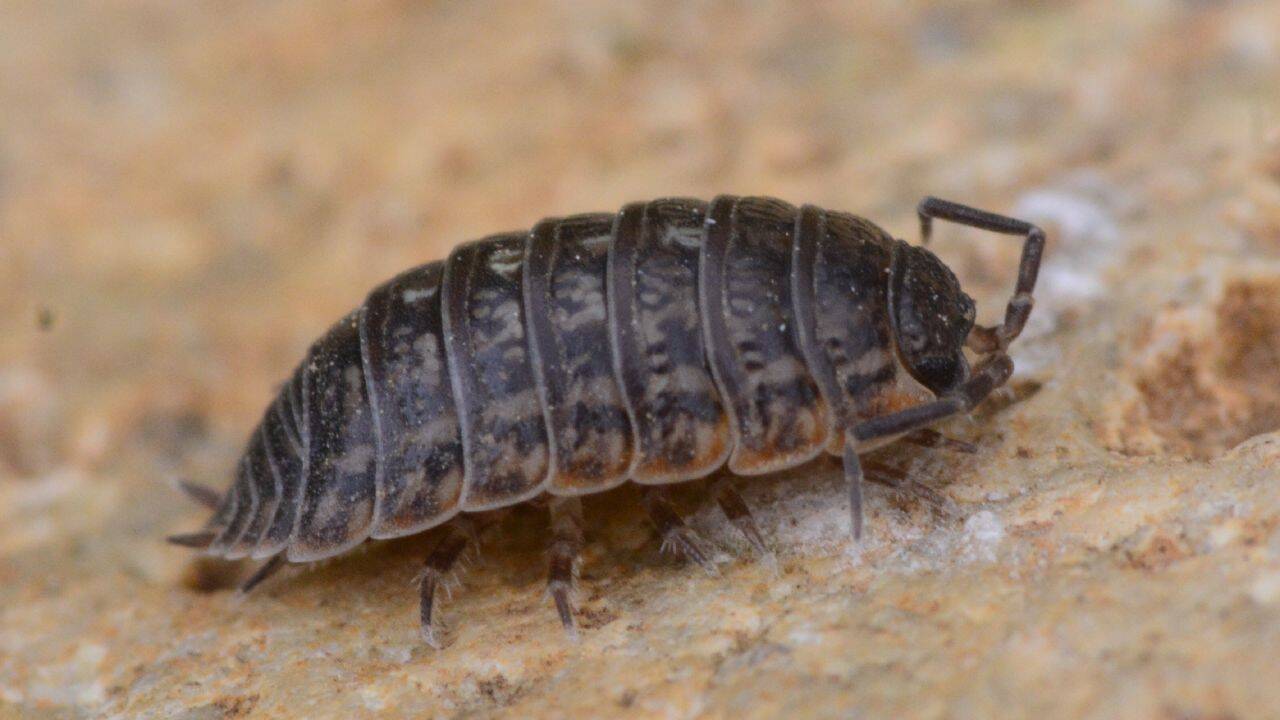
Until this research, almost nothing was known about A. sordidus beyond a limited range in southern Syria and the Golan Heights. The study not only documented the spirals but also expanded the known range of the species into the Jezreel Valley.The behaviour itself posed a puzzle: why would an animal that depends on moisture and cover come out into the open, under artificial light, and start circling with thousands of others? Was this some newly discovered social behaviour? A response to invisible forces like magnetism?To find out, the researchers began testing ideas.It’s not magnetism. It’s how we light the night.The team explored several possibilities, including the region’s unusual magnetic properties. They placed strong magnets near the circling isopods to see if they would react. They didn’t. The animals kept moving in the same way, unaffected.Next, they tried different types of light:– Ultraviolet (UV) light attracted only small numbers of isopods and never produced the large swirling formations.– White light, however, consistently triggered the behaviour.The key turned out not to be the colour of the light alone, but its shape. When a white lamp was pointed straight down at the ground, it created a circular pool of light with a clear boundary. Drawn to that edge, the isopods began walking along the perimeter. As more and more joined, the movement crossed a threshold and became a large, self‑sustaining procession—a living ring orbiting the circle of light.The geometry mattered. Our human habit of lighting spaces with distinct, round pools of brightness inadvertently created a path that these animals felt compelled to follow.Sheizaf later reflected that while collective movement is common in nature—think fish schools, bird flocks, or marching ants—seeing it in this form in isopods was entirely unexpected. Our modern infrastructure, he suggested, is interacting with instinctive behaviours in ways we’ve never really noticed.
Why scientists call them “death spirals”
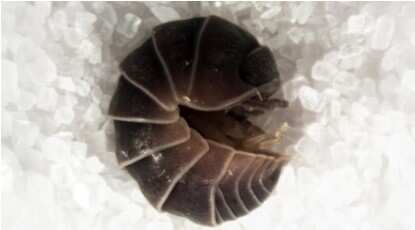
Photo credit: Idan Sheizaf, Ariel Chipman, and Eviatar Itzkovich
While the spirals are visually mesmerizing, the researchers don’t see them as harmless curiosity. They believe the formations are an unintended side effect of artificial light at night, not a natural social gathering.Several clues point in that direction:– Most of the individuals caught in the circles were female, many carrying eggs, which makes mating an unlikely explanation.– The behaviour pulls them out of their usual sheltered habitats and keeps them moving out in the open.This has serious consequences. During one observation, a centipede took advantage of the situation, preying on the distracted isopods as they continued circling. Locked into the movement pattern, the isopods seemed less responsive to threats, more exposed and less able to hide.There’s also the cost of wasted energy. For small creatures with limited resources, being trapped in long periods of unnecessary motion can be dangerous. It drains strength they need to survive, reproduce and cope with environmental stress.That’s why the researchers describe these formations as “death spirals”: not because the circle itself kills, but because the behaviour increases vulnerability at multiple levels.
A reminder of how easily we shape other lives
Perhaps the most striking part of this story is what it says about our everyday presence in the environment. Streetlights feel ordinary. We install them for safety, convenience and visibility. Yet something as simple as a circular pool of light on the ground can dramatically reshape instinctive behaviours in small animals most of us never notice.These isopods don’t understand “human infrastructure.” They respond to edges, patterns and brightness—signals that, in their evolutionary history, might have meant shelter, moisture or safe paths. In the modern world, those signals can misfire. A boundary of light becomes a loop they can’t easily leave.It’s a quiet example of how artificial light at night can do more than obscure the stars. It can rewrite behaviours that have evolved over millions of years, sometimes turning survival strategies into traps.When we think about how we design cities, parks and roads, these stories add another layer. They remind us that the night, and the creatures who live closest to it, are not just a backdrop to human life. They are part of a shared environment that reacts to the shapes, sounds and light we add.The spirals that caught an amateur naturalist’s eye in the Golan Heights may seem small compared to bigger environmental headlines. But for thousands of tiny bodies spinning in those circles, the impact is real—and for us, they’re a powerful prompt to ask: What other hidden behaviours might be quietly changing under the glow of our everyday lights?